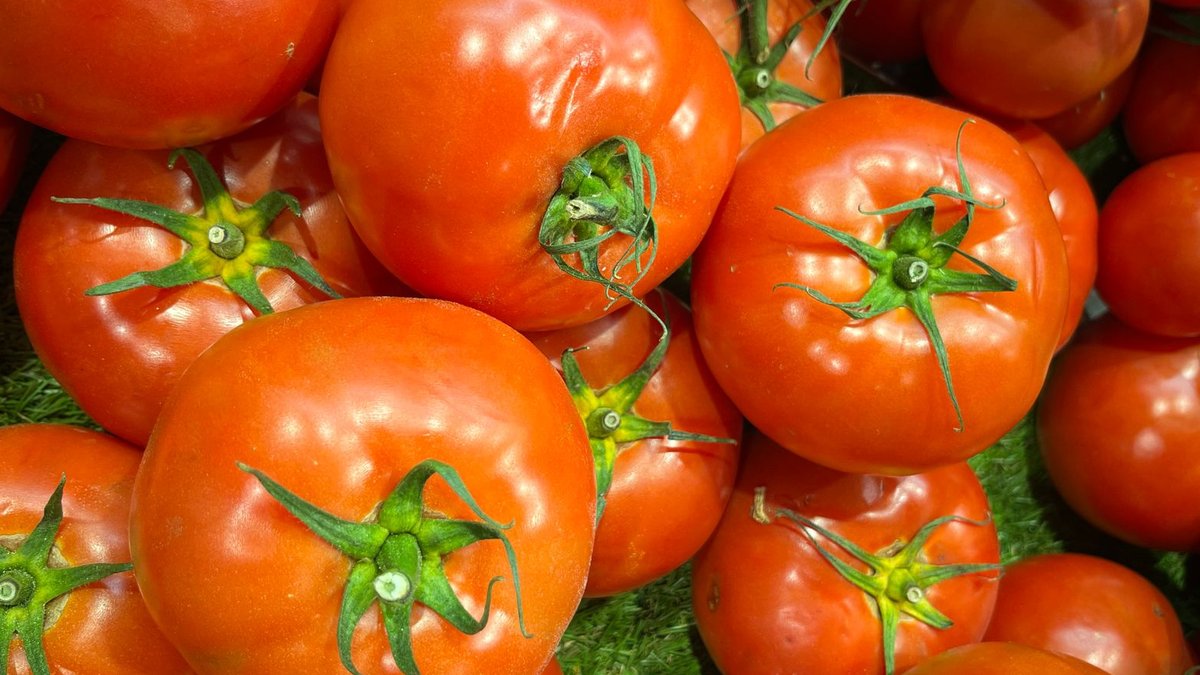
Ghana and India have agreed to a five-year partnership to boost local tomato production, cutting annual imports worth more than $230 million. The deal, signed on October 6, 2026, by the Indian Council of Agricultural Research (ICAR) and Ghana’s Council for Scientific and Industrial Research–Crops Research Institute (CSIR-CRI), will focus on research, technology transfer, and commercialization of high-yielding tomato varieties. The collaboration is expected to create new market opportunities for Ghanaian farmers and reduce the country’s reliance on foreign produce.
Domestic tomato production currently meets only 15% to 18% of Ghana’s demand, which exceeds 1.4 million tonnes annually, according to CSIR researchers. The agreement aims to close this gap by introducing improved seed varieties, currently, over 85% of planted seed is imported, and expanding farming techniques like irrigation and pest control. By shifting seed sourcing to locally produced varieties, the country hopes to retain a larger share of the agricultural value chain within its borders.
Beyond the crop, the pact will also address cassava, yam, and tuber processing, including cold storage and transport. A joint working group from ICAR and CSIR-CRI will oversee implementation, with meetings scheduled in New Delhi and Accra.
Read Also: Tilray Brands Revenue Rises 20% on Beverage Sales
Ghana’s reliance on imports reflects deeper challenges: weak seed systems, soil degradation, and limited infrastructure. The Ghana Tomato Self-Sufficiency Initiative, launched in September 2026, targets 100,000 tonnes of local production in the 2026-2027 season, scaling to 400,000 tonnes annually. The new pact with India complements this effort by providing technical expertise and commercial support.
Yields in Ghana average 7 to 10 tonnes per hectare, far below the 20 to 80 tonnes possible with improved varieties and better farming practices. Addressing these gaps requires coordinated efforts, which the joint working group is designed to deliver.