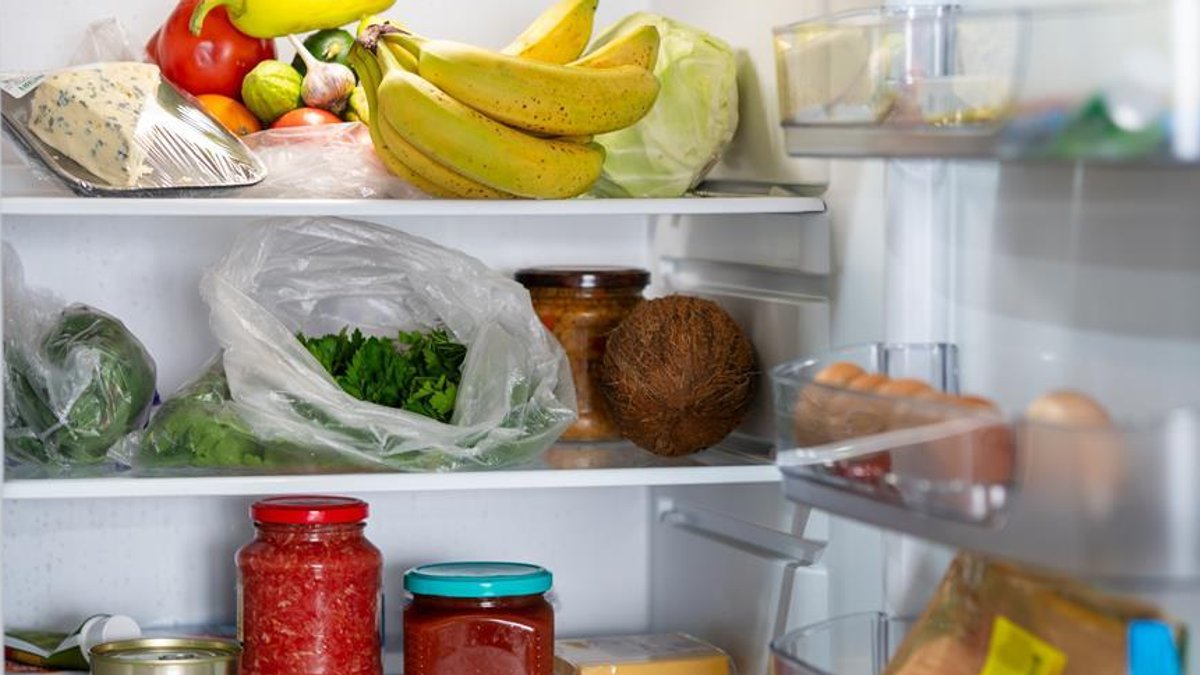
A study by Linköping University in Sweden has found that fridge design and food packaging significantly contribute to household food waste. The research involved 24 households across seven countries and suggests that overfilled fridges and poorly designed packaging lead to forgotten food and unnecessary waste.
Overfilled Fridges Lead to Forgotten Food
The investigation revealed that many families purchase large quantities of groceries, which quickly fills refrigerator space. When shelves become crowded, it becomes hard to see what is already stored, so items are pushed to the back and left unseen until they spoil.
Participants often relied on memory while shopping, which increased the chance of buying products they already owned. This habit, combined with limited visibility inside the fridge, creates a cycle of excess purchase and eventual waste.
Convenience also shaped storage behavior. Instead of arranging items according to specific temperature or humidity needs, people tended to place products wherever there was room. Frequently used goods were kept within easy reach, while less-used items were shoved into corners.
For instance, milk was commonly stored in the refrigerator door, even though that area is warmer and less suitable for preserving certain foods. Such placement can shorten shelf life and contribute to spoilage.
Packaging Design Contributes to Waste
The team found that packaging often makes it harder to manage food once it arrives home. Bulky shapes prevent neat stacking and can hide important information such as expiry dates, storage instructions, or nutritional labels.
Read Also: Food giants unite to boost sustainable farming efforts
Some containers, like brown paper bags used for fruit and vegetables, render the contents less visible after they are placed in the fridge or pantry. This reduced visibility encourages items to be forgotten.
According to the study, almost none of the participants considered fridge capacity when they shopped, assuming there would always be room for additional products. Babak Nemat, a postdoctoral fellow at the university, described the refrigerator as a “moral black hole,” where responsibility seems to end once food is stored inside.
Rethinking Fridge and Packaging Design
The researchers argue that cutting household food waste requires a shift in perspective. Instead of treating waste solely as an information or awareness problem, manufacturers should examine how packaging interacts with cramped storage spaces.
Fridge designs could be altered to promote better organization, making it easier to spot items that are nearing the end of their usable life. Such changes would help consumers identify forgotten products before they spoil.
The environmental impact of food waste is considerable. Professor Renee Wever from the university notes that roughly one-third of all food produced worldwide is discarded, with the majority of waste in Western countries occurring in shops or homes. This loss places a heavy strain on natural resources and contributes to climate change.