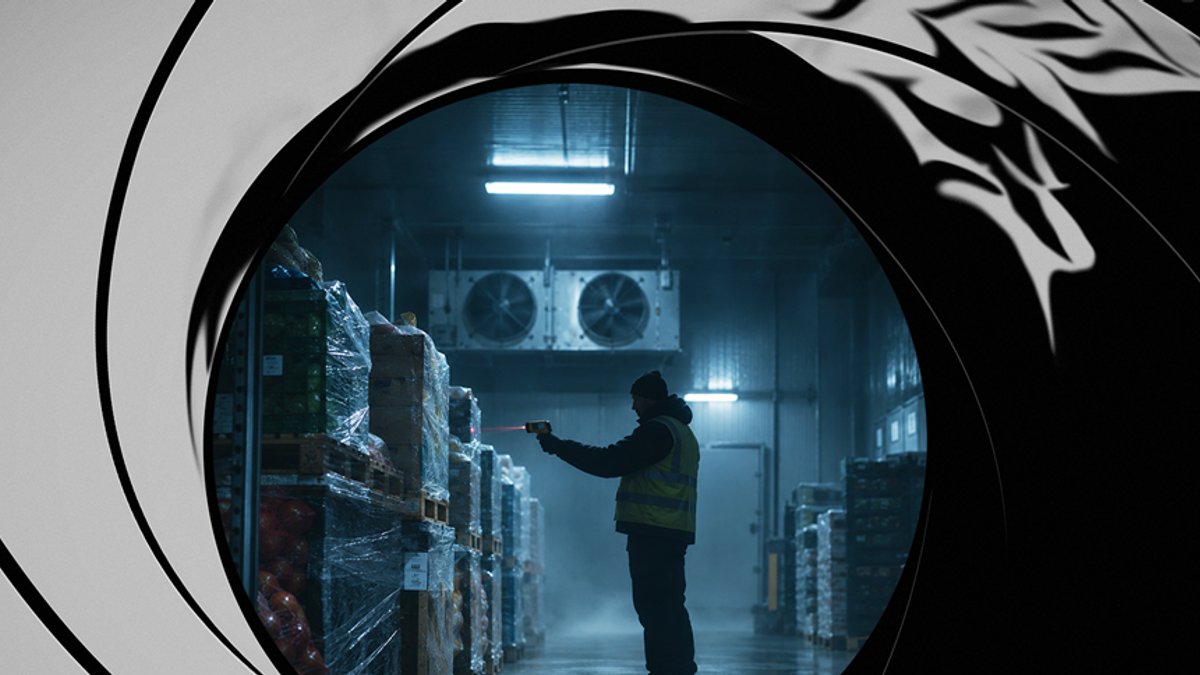
The food industry can no longer afford to ignore the lessons learned from other fields, such as the experience of serving on a nuclear submarine, where understanding systems and recognizing warning signs is essential to preventing manageable problems from escalating into emergencies.
Cyberattacks Hit Food Supply
A recent series of cyberattacks affecting European refrigeration, logistics, supermarket checkout systems, and manufacturing has highlighted the vulnerability of the food supply chain. The central finding is unsettling: restoring a digital system does not necessarily prove that the food it protected remains safe.
Cybersecurity in the Food Supply Chain
The food supply chain is complex, with ingredients produced in one country, processed in another, stored in a third, and sold in several markets. The technology coordinating this movement brings speed and visibility but also creates dependencies that can extend far beyond any single company’s walls.
The 2021 attack on Sweden’s Coop supermarkets and the Bakker Logistiek incident in the Netherlands demonstrated how a compromise involving an upstream technology provider can interrupt retail operations and deliveries. France’s October 2026 refrigeration incidents illustrated a different pathway, with reported interference with equipment that physically maintains safe storage conditions.
These distinctions are operationally important, as an attack on ordering software is not the same as unauthorized manipulation of refrigeration controls. Each requires different safeguards, expertise, and recovery decisions.
Leadership and Responsibility
Leaders should know which digital systems are essential to safe food handling, who can access them remotely, which suppliers maintain them, and what independent evidence will remain if monitoring data becomes unreliable. They should also know how long the business can operate when those systems are unavailable.
A system that saves time every day but cannot be trusted during an emergency may have created a new risk alongside its benefits. Food is more than an inventory category, and the consequences of food-system disruption do not end at the balance sheet.
The interruption may begin with a compromised computer, but its consequences arrive at a kitchen table, affecting people who rely on access to safe food. This is why a food company cannot evaluate cyber risk solely by asking how much a system outage will cost.
The more appropriate consideration is who depends on that system and what happens to them when it fails. A food company’s leadership is tested by what happens when the rules do not provide an easy answer, and compliance establishes an important floor.
Corporate Social Responsibility
According to Archie Carroll’s ‘Pyramid of Corporate Social Responsibility’, economic, legal, ethical, and philanthropic dimensions of business responsibility become relevant when digital vulnerabilities threaten the food supply. Economic responsibility is straightforward, as cyberattacks can destroy inventory, halt production, and damage customer relationships.
Legal responsibility includes applicable food safety and cybersecurity obligations, such as the EU’s NIS2 framework, which brings certain food production, processing, and distribution businesses within cybersecurity risk-management requirements.
Related Post: Food Industry Faces GRAS Reform, Tariffs, Legal Battles
However, ethical responsibility is the harder test, as executives must decide whether to justify delaying action when they know a critical controller runs outdated software or a remote-access connection is poorly secured.
When monitoring records are unreliable, will they support a product hold? When protecting consumers means discarding valuable inventory, will they accept the loss? These are the decisions that food industry leaders must make to demonstrate their commitment to protecting the food supply.
Dr. Detwiler emphasizes the importance of awareness, allies, advocacy, and activism in food safety leadership, recognizing the risk, bringing the right people together, making the case for protection, and turning that commitment into action.
For the digital food supply, this progression should begin with five questions, including whether leaders know which systems are essential to keeping food safe and whether they can protect consumers when those systems fail or their data becomes unreliable.
Developing independent ways to verify temperatures and other critical conditions, establishing procedures for isolating inventory, and deciding whether products can be released are all essential steps in protecting the food supply.
Conducting realistic exercises that include food safety, engineering, technology specialists, operations, communications, and senior leadership is also essential, as is examining supplier access, software maintenance, vulnerability management, incident reporting, and recovery arrangements.
Leadership Lessons Learned
As Dr. Detwiler notes, serving aboard a submarine taught him that successful missions depend less on last-minute heroics than on preparation, teamwork, reliable instruments, and people who understand their responsibilities.
In the context of food safety, this means that leaders must be prepared to make difficult decisions, prioritize consumer protection, and take proactive steps to prevent foreseeable harm.
The World Health Organization’s 2003 report, Terrorist Threats to Food, recognized that deliberate attacks against food systems could achieve objectives extending far beyond illness and death, including economic disruption, damaged trade, public fear, and political instability.
Today, cyberattacks introduce additional ways to disrupt the systems that produce, preserve, transport, and sell food, highlighting the need for food industry leaders to take responsibility for protecting the food supply.
A recent warning from the French cybersecurity authority that an attack may be ongoing as stores scramble to restock highlights the urgency of this issue.