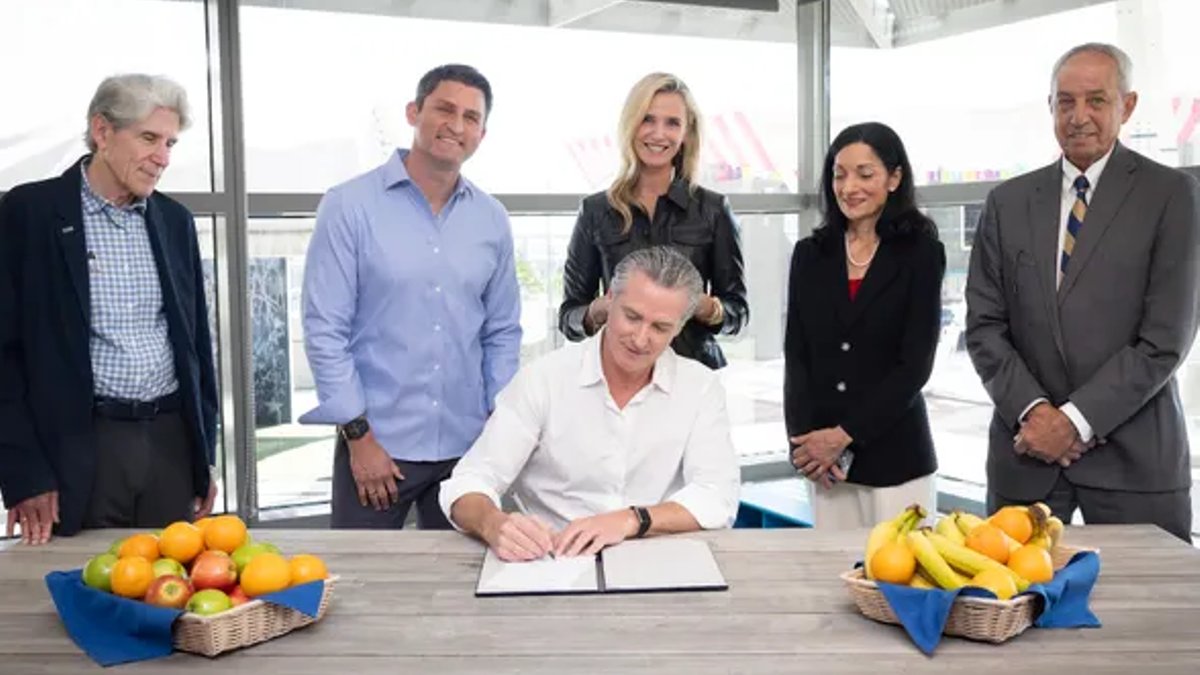
California has established itself as the first U.S. state to mandate a voluntary labeling system for foods that fail to meet its criteria for ultraprocessed items, a decision that has drawn both praise and opposition from industry stakeholders. Governor Gavin Newsom signed the legislation, creating an official seal for products that exclude artificial additives and excessive levels of saturated fat, sodium, or added sugars. The policy applies to any item containing at least one additive or high amounts of unhealthy ingredients, as defined by the state’s framework introduced last September.
Retailers operating large grocery chains must now prominently feature the new label on any products meeting the certification threshold of at least 25 approved items. Advocates for the measure claim it will empower consumers by making healthier choices more transparent, while industry representatives express fears that inconsistent state-level definitions could disrupt supply chains and create logistical challenges. The Institute of Food Technologists, a trade association, has warned that divergent standards could complicate school meal programs, federal nutrition guidelines, and public health initiatives. Anna Rosales, the organization’s vice president of science and policy, emphasized that any labeling system must rely on rigorous scientific evidence and remain flexible as nutritional research advances.
Unlike other non-ultraprocessed certifications that focus primarily on production methods, California’s approach centers on ingredient quality and direct health implications. Critics argue this distinction risks misclassifying nutrient-rich staples such as whole-grain bread or yogurt, which contain processing elements but provide essential dietary benefits. Supporters counter that the state’s criteria prioritize public health by targeting products with proven links to chronic diseases.