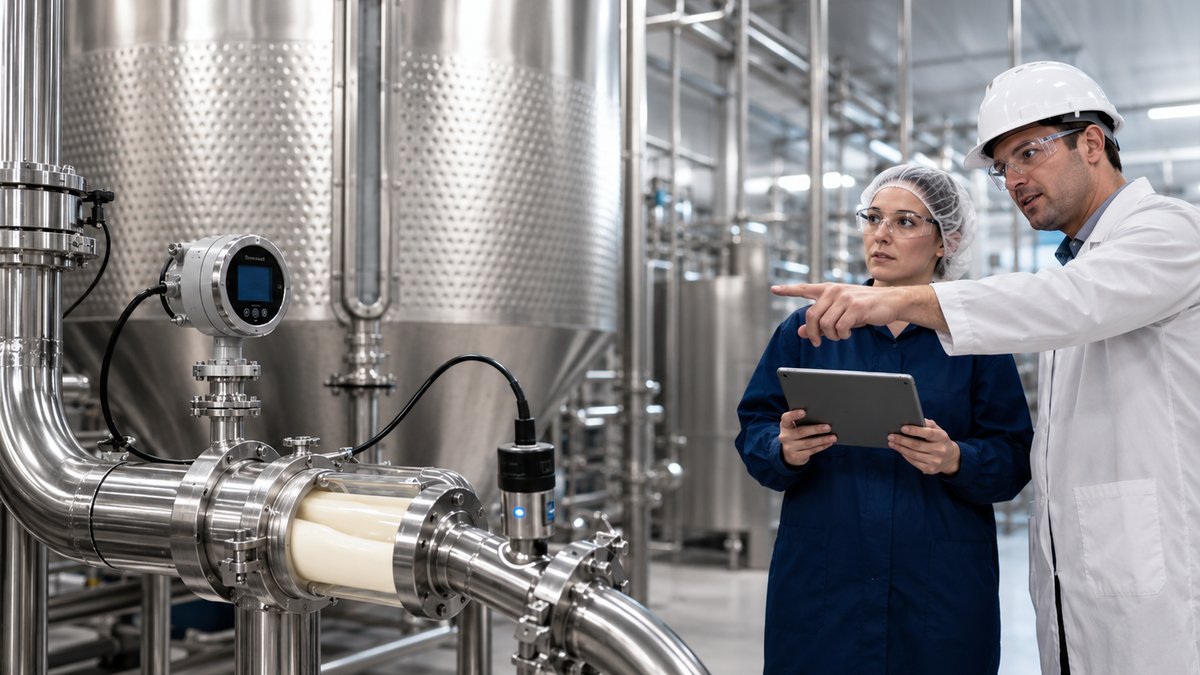
Food waste reduction in manufacturing can be tackled with an engineering mindset that treats product loss like any other process risk, according to a framework outlined by a senior process engineer at Schreiber Foods.
Define the loss boundary and quantify hold‑up
The first step is to draw a clear boundary around every point where product might linger after the intended transfer is complete. This includes truck‑to‑silo receiving, bulk ingredient unloading, mix‑tank transfers, flow‑panel routing, filler feed loops, recirculation circuits, and the transition to clean‑in‑place (CIP) operations. The boundary should encompass all piping, valve clusters, pump casings, strainers, magnetic traps, heat exchangers, flowmeters, and low‑point drains.
Engineers then calculate the hold‑up volume for each segment by multiplying internal area by effective length and fill factor, then converting to mass using product density. Multiplying that figure by the annual event count and the monetary value of the product yields a rough estimate of potential loss. The calculation deliberately includes often‑overlooked components such as flexible truck hoses, pump suction bells, dead legs, vertical risers, crossovers, and filter housings. The goal is not a perfect digital twin but a practical identification of loss mechanisms that merit redesign or automation.
Related: How to ensure a successful product recall
Detect the product‑water interface before cleaning begins
Recovery must occur before the process enters a chemical or microbiological cleaning phase. Once caustic, acidic, or sanitizer solutions mix with the product, the recovery decision becomes far more restrictive. Suitable recovery media range from potable water and product push to air, nitrogen, or sanitary pigging, depending on viscosity, shear sensitivity, allergen status, and equipment design.
Relying on timers alone is weak; instead, the framework recommends using process signals that identify the product‑water interface. Turbidity works well when product opacity differs sharply from water, while density measurements help with dairy, sauces, and syrups. Conductivity can distinguish product, water, and CIP solutions when their ionic signatures differ. In high‑risk cases, a two‑out‑of‑two confirmation—such as turbidity below a set threshold for a defined period plus a maximum injected volume not exceeded—provides added safety.
A robust control sequence fails safe. If a turbidity sensor fails, the divert valve stays closed to product. If a flowmeter does not totalize, the push stops. If valve feedback disagrees with the commanded state, the recovery step aborts and alarms sound. When product temperature, identity, allergen status, or hold time fall outside allowed limits, the material is routed to a controlled disposition path rather than back into the food stream.
Related: Winning Prop 65 Food Cases Requires Averaging
Validate, govern, and scale the recovery effort
Validation starts with low‑tech trials.
Collect displaced material during a controlled event, weigh it, and compare it with the calculated hold‑up. Barrel checks, though simple, reveal whether the loss is real and whether the model is conservative. After commissioning, routine evidence should include metrics such as recovered mass per event, water push volume, turbidity or density trends at cutover, number of diversion events, over‑volume trips, sensor faults, valve mismatch alarms, and quality results on receiving tanks.
The recovery program must pass through management of change (MOC) and food‑safety plan review. The FDA’s preventive controls rule and 21 CFR Part 117 require that any recovered material remain within the same product identity, avoid allergen cross‑contact, and not introduce new dead legs or harborage points. Standards such as 3‑A Sanitary Standards and EHEDG guidance provide criteria for hygienic design, pump selection, and valve materials.
Related: McCormick must fix ERP to meet $300M target
What makes this approach nationally scalable is its sector‑neutral nature. Whether a plant processes dairy, beverages, sauces, dressings, or cultured foods, the underlying physics—pipe volume, residual product, interface movement, valve timing, sensor reliability, and cleaning transition—are the same. By reducing waste before it reaches the drain, manufacturers also lessen the burden on municipal waste systems. EPA estimates that food accounts for about 24 % of material in solid‑waste landfills and generates 58 % of landfill methane emissions. Sending food down the drain is among the least preferred pathways because it can decay rapidly in sewers and increase wastewater‑treatment energy use.
In comparison to past efforts that focused on post‑production waste disposal, this engineering‑first method resembles the shift seen in automotive manufacturing when lean principles moved from end‑of‑line inspection to upstream defect prevention. Both cases show that measurable, controllable processes yield more reliable outcomes than reactive fixes.
The primary concern in product recovery is proving, with engineering and food‑safety evidence, that the material remains food. When hold‑up calculations, interface instrumentation, redundant totalized‑volume protection, validated mass balance, and disciplined MOC back a recovery project, it becomes a scalable source‑reduction method that supports food security, reduces wastewater loading, protects landfill methane objectives, and strengthens plant‑floor process control.